
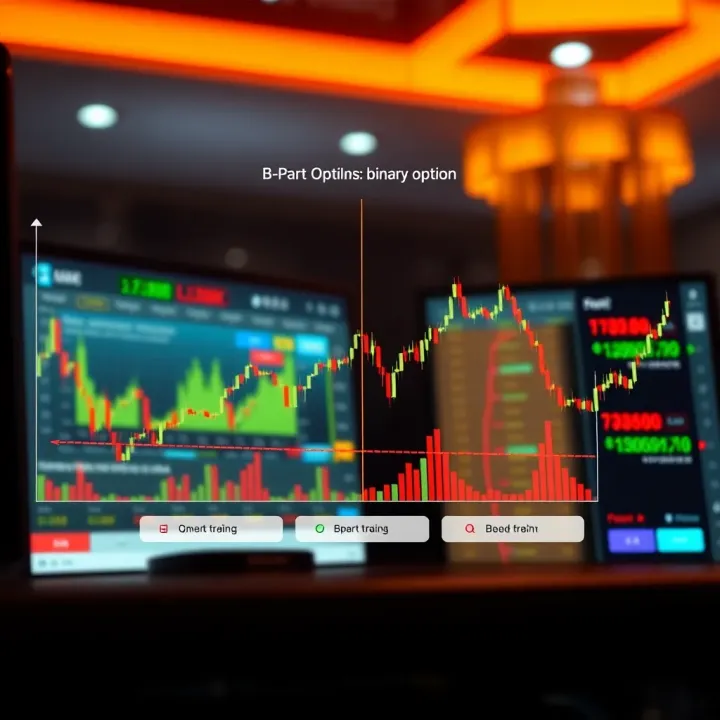
Understanding Binary Options Trading in Nigeria
🇳🇬 Learn how binary options trading works in Nigeria, its legal status, risks, and practical tips to trade safely and smartly in the local market. 📈
Edited By
Amelia Scott
Binary options trading has become a popular way for Nigerian investors to tap into financial markets and potentially earn quick profits. Unlike traditional investments, binary options offer a straightforward "yes" or "no" outcome: the asset will either meet a specific price target within a set timeframe or it won't. This simplicity attracts many traders but also means risks are high, especially without proper understanding.
At its core, binary options are contracts where you predict whether the price of an asset — like forex pairs (USD/NGN), commodities (crude oil), stocks, or indices — will rise or fall over a short period. For example, you might bet ₦10,000 that the price of Brent crude oil will be above $70 by market close. If correct, you earn a fixed return, typically between 70%-90%. If wrong, you lose your initial stake.

These trades often last minutes to hours, making them appealing for the fast-paced Nigerian investor seeking quick returns amid the country's sometimes volatile economy. However, the temptation of fast profits can overshadow the reality of significant loss risks.
To trade binary options responsibly, Nigerian traders must understand the mechanics, risks, and regulatory landscape that govern this market.
Fixed risk and reward: You know potential gains or losses before entering a trade.
Short-term expiry: Trades can last from 60 seconds to several hours.
Asset variety: Choices include forex, stocks like Dangote Cement, commodities like gold, and global indices.
Suppose you expect the price of Naira against the US dollar (USD/NGN) to strengthen by the afternoon. You buy a binary option that expires at 2 pm, predicting the exchange rate will be lower than the current 460 after expiry. If your prediction is right, you get a payout, for example, ₦9,000 profit on your ₦10,000 stake. If not, you lose the ₦10,000.
Understanding these basics helps set realistic expectations, especially in Nigeria's complex forex and commodities environment affected by Central Bank of Nigeria (CBN) policies, fuel scarcity, and import dependencies.
This guide will next cover the operational mechanics, risks, regulations, and strategies to help Nigerian traders navigate binary options trading confidently.
Binary options trade offers a straightforward way for investors to profit from movements in financial markets. Instead of owning the assets themselves, traders predict whether the price of an asset will rise or fall within a specified time. This simplicity appeals to many Nigerians who want a quick understanding of the financial market's ebb and flow without deep technical analysis.
At its core, a binary option is a contract where you bet on the direction of an asset's price over a short period. The term "binary" refers to the two possible outcomes: either you win a fixed payout if your prediction is correct or lose your investment if wrong. For example, you might predict that the price of oil will be above $70 per barrel in the next hour. If it is, you receive a predetermined return; if not, your investment is lost.
Placing and settling a trade is straightforward. After choosing an asset, expiry time, and investment amount, you select "call" if you think the price will rise or "put" if it will fall. When the expiry time ends, the platform automatically settles the trade based on the price at that moment. Settlement usually happens within minutes, making it faster than traditional trading.
The most common assets involved in binary options include forex pairs such as USD/NGN or EUR/USD, popular stocks like MTN or Dangote Cement, and commodities like crude oil or gold. These assets have sufficient market activity, allowing traders to find predictable patterns and tradable opportunities.
One major distinction is the all-or-nothing payout. Unlike conventional trading where profits or losses fluctuate with price movement, binary options provide a fixed return or total loss, making risk clear upfront. For instance, if you invest ₦10,000 in a successful trade, you might earn ₦18,000. But if you’re wrong, you lose the entire ₦10,000.
Binary options also feature short expiry times, often as short as 60 seconds or up to a few hours. This contrasts with stock or forex trading, where positions can be held for days or months. Short expiries suit traders who prefer quicker returns and can monitor markets closely, like someone checking Lagos okada prices frequently.
Compared to traditional forex and stock trading, binary options remove complexities such as stop-loss orders, margin calls, or position sizing. This simplicity can be an advantage for beginners, though it also means less control over trade flexibility. For Nigerian traders, binary options may offer a quicker route to market exposure, but the all-or-nothing nature demands discipline and proper risk management.
Understanding these foundational differences helps Nigerian traders decide if binary options suit their investment style and financial goals.
Understanding how binary options platforms operate is essential for Nigerian traders seeking to navigate this market safely and profitably. These platforms serve as the user interface between traders and the financial market, providing tools to place trades, monitor assets, and manage funds. Choosing the right platform can improve your trade execution speed, accuracy, and access to vital market data.
Broker-operated platforms usually come directly from the broker itself, meaning the trading and fund management occur within a single ecosystem. This simplifies deposit and withdrawal processes using methods convenient in Nigeria, like bank transfers or USSD payments. Brokers such as IQ Option or ExpertOption maintain their own platforms tailored to both desktop and mobile users. However, trustworthiness is key since unlicensed brokers have repeatedly targeted Nigerian investors. Always verify the broker’s legitimacy with Nigerian regulatory bodies.

Third-party trading platforms offer access to binary options alongside other financial instruments by aggregating multiple brokers or markets in one place. Providers like MetaTrader 4 or MetaTrader 5, while originally designed for forex and CFDs, sometimes support binary options through plugin tools. These platforms offer more flexibility in analysis and order management. For Nigerian traders comfortable with advanced charting and technical indicators, third-party platforms provide a more versatile experience, allowing better decision-making beyond simple trade clicks.
Mobile apps popular in Nigeria have become the go-to choice because they cater to traders who need to manage positions on the go amid demanding schedules and unreliable power. Apps such as Olymp Trade and Pocket Option feature simple interfaces suitable for smartphones, allowing fast trade execution without lag. These apps are optimised for Nigeria’s mobile networks and sometimes allow direct funding through local payment gateways. The ability to trade instantly during important market news makes mobile platforms highly practical.
Simple interface and trade execution are vital for beginners and busy traders alike. Platforms designed with clean layouts help Nigerian users place trades quickly by reducing confusion. For example, a well-designed platform allows you to select the asset, expiry time, and investment amount in just a few taps. Quick execution ensures market movements do not negate your trade conditions, especially in volatile environments.
Charting and analysis tools assist traders to evaluate past asset performance and predict future price directions. Many platforms offer built-in charts with indicators like RSI, MACD, and moving averages. Nigerian traders who understand these tools can better interpret market sentiment, avoiding guesswork in their trades. Some platforms even allow custom technical analysis overlays, helping refined strategies for risk management.
Demo accounts and educational resources provide a risk-free environment to practice trading strategies before committing real money. Nigerian platforms like IQ Option offer demo accounts with virtual funds, enabling users to familiarise themselves with the interface and test different expiry times and assets. Additionally, educational videos and tutorials available on these platforms boost trader confidence. Using demo accounts helps prevent rash decisions and builds trading discipline, which is crucial given binary options’ inherent risks.
Choosing a reliable binary options platform with robust features tailored to Nigerian payment options and internet realities can significantly influence your trading success and protect you from scams.
By understanding the platforms and their tools, Nigerian traders position themselves to trade smarter, safer, and with more control over their investment decisions.
Trading binary options comes with significant risks that every Nigerian trader must understand before diving in. Unlike traditional investments where losses might be gradual, binary options operate on an all-or-nothing basis, meaning you could lose your entire stake very quickly. This high-risk profile makes it essential for traders to approach binary options with caution and a sound strategy.
Potential for total loss of investment: In binary options trading, you predict whether an asset’s price will go up or down within a short time frame. If your prediction is wrong, you lose the whole amount you invested in that trade. For example, if you put ₦50,000 on a binary option and it expires out of the money, that ₦50,000 evaporates immediately. Unlike forex or stock trading where you can recover part of your investment through partial price movements, binary options offer no partial payouts. This upfront risk means you need to manage your investment size carefully to avoid wiping out your account too fast.
Impact of market volatility on results: Markets can be unpredictable. Prices can swing suddenly due to events like Central Bank announcements, political developments, or unexpected economic data releases. Such volatility can quickly flip the outcome of your trades. Suppose an investor predicts that the naira-dollar rate will strengthen, but a sudden policy change causes it to weaken just before option expiry — that trade fails instantly. Nigerian traders should keep market volatility in mind and avoid trading near major news events unless they understand how these affect price movements.
Unlicensed brokers targeting Nigerian investors: Unfortunately, many binary options brokers lack proper licences and set up specifically to target Nigerian investors. These platforms may promise quick profits but delay or refuse withdrawals, causing huge losses. Unlike regulated forex brokers, many binary options operators are not under the watch of Nigeria’s securities or financial regulatory authorities. This lack of oversight increases the risk of fraud and dishonest behaviour.
Always verify a broker’s regulatory status before investing. A legitimate broker usually holds licences from recognised bodies and provides transparent terms.
CBN stance on binary options trading: The Central Bank of Nigeria (CBN) has issued warnings against binary options trading because of its high-risk, speculative nature. CBN emphasises that binary options are not recognised as a legitimate means of investment or wealth creation. This stance means Nigerian banks may restrict payment transactions to these platforms, and investors lack official protection. Traders should note that engaging with binary options is at their own risk, without formal legal safeguards.
How to avoid fraud and fake platforms: To shield yourself from scams, use these practical steps:
Choose brokers regulated by internationally recognised authorities such as the UK’s FCA or CySEC.
Avoid platforms that guarantee unrealistic returns or pressure you to make fast deposits.
Test platforms using demo accounts before committing real money.
Confirm that withdrawal processes are transparent and documented clearly.
Seek reviews and experiences shared by fellow Nigerian traders.
Being vigilant and doing due diligence can save you from losing your hard-earned naira to scams. Trading binary options requires awareness of these risks and a commitment to protect your funds.
Trading binary options without a clear strategy is like driving a danfo in Lagos without knowing the destination – the chances of crashing are high. Having practical strategies helps you manage risks better, improve decision-making, and protect your ₦ investment. In Nigeria, where market volatility meets occasional internet glitches, being smart and methodical in trading is especially crucial.
Economic news affects asset prices immediate—take for instance the Central Bank of Nigeria (CBN) announcements on interest rates or inflation data releases. Such news can influence the forex pairs or commodities you trade in binary options. For example, a surprise hike in the Monetary Policy Rate (MPR) can cause the naira to strengthen against the dollar, affecting currency pair trades.
Following scheduled events like GDP reports or oil price changes helps you predict possible market movements. Nigerian traders watch these events closely to spot good trading opportunities or avoid risky moments. Staying updated with credible news sources and economic calendars improves your timing and reduces guesswork.
Charts translate market behaviour into visual patterns. Learning to read these helps you understand price direction and momentum. Simple tools like Moving Averages (MA) or Relative Strength Index (RSI) can point out when an asset might rise or fall.
For instance, if the RSI signals an asset is oversold, it might rebound soon, so you could place a “Call” option. On the other hand, if it’s overbought, a “Put” option might be better. Combining charts with news events creates a clearer picture to guide your trades.
Never risk more than you can afford to lose. Allocate a fixed percentage of your trading capital for each trade—many experienced traders keep it under 5%. If you start with ₦50,000, you shouldn’t put more than ₦2,500 on a single trade. This prevents total wipeout when the market doesn’t go your way.
Keeping limits disciplined avoids emotional decisions. Say you lose three trades in a row; sticking to limits helps you step back and avoid chasing losses, which can spiral out of control.
Binary options come with expiry times ranging from 30 seconds to several hours. Short expiry attracts traders looking for quick returns but carries more risk due to sudden price swings. Longer expiry lets the market settle, which sometimes reduces random noise.
For Nigerian traders dealing with unstable internet or power supply issues, choosing expiry times of 5 to 15 minutes can strike a balance. It allows time to execute trades calmly, not rush decisions, and accommodates occasional connectivity hiccups.
Demo accounts are free practice environments with virtual money where you can test strategies and understand platform mechanics. Nigerian platforms like Olymp Trade or Binomo offer demo versions tailored for beginners.
Practising with demo accounts lets you explore different expiry times, assets, and analysis methods without risking real money. It also helps build confidence before you invest your hard-earned ₦. Many successful traders spent several weeks perfecting their approach on demo accounts before going live.
Wise trading is less about luck and more about preparation and control. Combining solid analysis with smart risk management improves your odds in the binary options market.
Starting binary options trading in Nigeria demands careful preparation. With the growing popularity of this investment avenue, getting set up properly can protect your funds and improve your chances of success. The key lies in picking the right broker and platform, understanding account requirements, and managing deposits and withdrawals effectively.
Checking broker legitimacy is the first step to avoid falling victim to scams. Many unlicensed operators target Nigerian traders, promising high returns but disappearing with your money. Verify whether the broker is regulated by recognised authorities such as the Securities and Exchange Commission (SEC) Nigeria or international regulators like CySEC or FCA. For example, using a broker with SEC registration assures some level of accountability and legal recourse if issues arise.
Payment options including local bank transfers and USSD are essential for convenience and security. Nigerian traders often face difficulties when brokers do not support local payment methods. Look for platforms that accept payments through local banks like GTBank, Access Bank, or Zenith Bank, either by direct transfer or via USSD codes. These methods reduce fees, speed up deposits, and are widely accessible across Nigeria, unlike international card payments that may be blocked or costly.
Customer support quality can greatly affect your trading experience. A broker offering prompt, clear support channels such as live chat, phone calls, or email helps resolve issues swiftly. Nigerian traders benefit from brokers who provide support during local business hours and offer assistance in English or Nigerian Pidgin if needed. Good customer service also helps with technical problems, account questions, and withdrawal concerns.
Required documents and verification help both the trader and broker maintain security and comply with regulations. Typically, you’ll need a valid means of identification like a National Identity Number (NIN) card or international passport, proof of address such as a utility bill not older than three months, and sometimes a photograph. Verification prevents fraud and money laundering while enabling smoother withdrawals later.
Deposit methods relevant to Nigerian users must be seamless. Apart from bank transfers and USSD payments, mobile money platforms like OPay or PalmPay are becoming popular for funding trading accounts. Additionally, some brokers accept payment via Naija-friendly fintech services like Kuda or Flutterwave, which can offer quick processing with low transaction fees. Always confirm the deposit limits and any charges before funding your account.
Withdrawal process and limitations are vital to understand before starting trades. Some brokers impose minimum withdrawal amounts or charge high fees that chip away at your profits. Nigerian traders should seek platforms that process withdrawals within 24 to 72 hours and offer local currency payments to avoid unnecessary conversion costs. Transparent withdrawal policies and customer feedback can indicate how reliable a broker is when it comes to returning profits.
Starting binary options trading without careful broker selection and account setup is like embarking on a trip without a map. Take the time to choose wisely and understand the financial flows for a smoother trading experience.
Taking these steps seriously gives you a solid foundation as you explore the fast-paced world of binary options in Nigeria.
🇳🇬 Learn how binary options trading works in Nigeria, its legal status, risks, and practical tips to trade safely and smartly in the local market. 📈

Explore how binary options work, key strategies, risks, legal tips 🇳🇬 and protections against scams for Nigerian investors ready to trade smart.
Discover how Nigerian traders can use binary options forums 📈 to gain reliable insights, avoid scams, share strategies, and boost trading skills safely.
Learn how Nigerian traders can pick trustworthy binary options brokers ✅, understand key risks ⚠️, and get tips for safer trading in this clear guide.
Based on 14 reviews