
Top Crypto Trading Bots for Nigerian Traders
Discover the best crypto trading bots for Nigerian traders 🤖. Learn key features, benefits, and tips to boost your crypto trades effectively in Nigeria 🇳🇬.
Edited By
William Foster
Crypto trading in Nigeria is gaining serious attention as more investors seek ways to grow their ₦ savings beyond traditional options like fixed deposits or real estate. However, this market comes with its fair share of unpredictability and risks, especially given Nigeria's specific economic and regulatory environment.
Understanding clear strategies is vital if you want to avoid common pitfalls and turn your crypto trades into consistent profits. This guide aims to cut through the noise, offering practical insights tailored to Nigerian conditions, including how to manage risk in an economy with naira volatility and sometimes erratic power supply.
You'll learn about the different trading styles that fit various lifestyles and risk appetites, from quick day trading to longer-term holding. We’ll also explore key risk management tools to keep your funds protected, considering challenges like fluctuating exchange rates and the occasional platform outage.
Successful crypto trading isn’t about luck—it’s about discipline, knowledge, and adapting strategies to your local context.
In Nigeria, where internet disruptions or banking hiccups can affect trades, having a plan that factors these realities means you won’t be caught off-guard. For example, using trustworthy local platforms like Paystack or Flutterwave for easier naira transactions can save you from unnecessary delays compared to relying solely on foreign exchanges.
This article will break down technical tools that actually work in our market and show you how to combine them with gut feeling and current market trends. Whether you’re a broker advising clients or a young trader starting out, the goal is to equip you with clear, actionable approaches that reflect Nigeria’s unique crypto scene.
With smart strategies, you can turn crypto trading from a speculative gamble into a disciplined route to grow wealth steadily in naira terms.
Grasping the fundamentals of crypto trading is essential for any Nigerian trader aiming to navigate this fast-moving market successfully. Understanding key concepts helps avoid common pitfalls and makes informed decisions possible, especially amid Nigeria’s unique financial environment, where naira volatility and fintech integration play major roles.
Crypto trading refers to buying and selling cryptocurrencies like Bitcoin, Ethereum, or stablecoins with the objective to profit from price changes. It is a dynamic activity involving short-term movements rather than simply holding coins over the long haul. This approach lets traders react to market shifts, news updates, or even sudden naira exchange rate fluctuations that might affect profitability.
In Nigeria, crypto trading has grown beyond hobby status to become a serious side hustle or business for many. Traders engage through platforms where they execute multiple trades daily or regularly, hoping to capitalise on Nigeria’s sometimes turbulent financial market to boost their earnings.
Crypto trading focuses on short- to medium-term buy and sell actions motivated by price volatility. Traders often close positions within hours, days, or weeks. Investors, on the other hand, tend to buy and hold cryptocurrencies for months or years, expecting appreciation over time. This means investing requires a more patient mindset, while trading demands active monitoring and quick decision-making.
For example, a Nigerian investor might buy Bitcoin and hold it for a year, anticipating larger returns, while a trader might buy and sell Ethereum multiple times within a week to capture smaller, more frequent profits amid market swings. Recognising this difference helps you choose a strategy that fits your risk appetite and available time.
Nigeria has access to various global and local platforms tailored to the trading needs of its users. Popular exchanges include Binance, one of the largest global players offering a wide range of cryptocurrencies; Binance NG, its local counterpart designed to support naira transactions more smoothly; and Remitano, known for peer-to-peer trading which benefits traders seeking flexibility and local currency options.
These platforms provide easy access to market liquidity and competitive fees, but Nigerian traders should consider factors like deposit and withdrawal speed in naira, customer support quality, and platform security. For instance, Binance NG supports direct naira wallet funding, making it convenient to start trading without worrying about complex currency conversion.
Selecting a trustworthy exchange is critical. Nigerian traders should prioritise platforms with a strong security track record, transparent fee structures, and compliance with local regulations to avoid scams or sudden account freezes. Platforms like Binance NG and Remitano have built reputations through consistent user experiences and regulatory awareness.
You should also consider ease of use, mobile app availability, and integration with local payment gateways like Flutterwave or Paystack. A reliable platform makes trading smoother, helping you focus on strategy rather than technical delays or interruptions.
Starting with solid basics—understanding what crypto trading is, recognising the difference from investing, and choosing the right trading platform—is your foundation for successful trading in Nigeria’s unique market climate.
Understanding popular crypto trading strategies helps you choose methods that suit your style and the local market. Strategies like day trading, swing trading, and HODLing each have distinct features, risks, and potential rewards, especially within Nigeria’s unique crypto scene.
Day trading involves buying and selling cryptocurrencies within the same day to profit from price fluctuations. Traders closely monitor markets and use short-term signals to enter and exit positions quickly. This strategy suits Nigerians who can dedicate time daily to watch the market and respond swiftly to price movements.

Given the volatility of coins like Bitcoin and Ethereum, day trading offers opportunities. However, Nigerian traders must handle challenges such as internet reliability and exchange liquidity. Having stable power supply and access to platforms like Binance NG or Remitano improves chances of timely trades.
The risks include rapid price swings that can wipe out profits quickly. The frequent trading also means incurring multiple transaction fees, which add up in naira terms. Emotional decision-making under pressure is common, especially with naira’s unpredictable exchange rate affecting how gains convert to local currency.
Still, skilled day traders who use technical analysis and risk management can capitalise on Nigeria’s active crypto market. It demands discipline and readiness to cut losses early.
Swing trading focuses on capturing gains over several days or weeks by holding crypto assets through short-term price trends. It’s less intense than day trading, appealing to Nigerians juggling other jobs or responsibilities but wanting to be active in the market.
Swing traders rely on market indicators and patterns to buy low during pullbacks and sell high when the momentum peaks. This method fits Nigeria’s volatile coins, where sharp moves often extend over days.
For example, coins like Binance Coin (BNB) and Cardano (ADA) often display swings that last from a few days to a few weeks. Swing traders watch news events, platform updates, or regulatory shifts that can influence these trends.
Using swing trading means facing less stress than day trading, with fewer trades and lower fees. But patience is necessary to hold through market jitters. The strategy blends well with Nigeria’s typical internet and power conditions, requiring less frequent market checks.
HODL, intentional misspelling of 'hold', means keeping cryptocurrencies for the long term despite short-term volatility. This strategy suits Nigerians confident in crypto’s future but less interested in daily market noise.
HODLing leverages the general upward trend of strong projects like Bitcoin or Ethereum over years. It reduces the need for technical analysis or constant market watching.
In Nigeria, consider holding crypto long term when your goal is wealth preservation against naira’s depreciation or when you anticipate future regulatory clarity boosting coin value. It’s practical if you face unstable power or internet access, making frequent trading unreliable.
HODLing also means you avoid transaction fees from multiple buys and sells. However, it demands patience and the ability to ignore emotional reactions during market dips common in Nigerian crypto trading.
Each strategy fits different lifestyles and goals. Understanding their strengths and weaknesses helps Nigerian traders build a practical plan that matches local realities and personal commitment levels.
Technical analysis provides Nigerian crypto traders with vital tools to make informed decisions rather than relying on guesswork or emotions. It involves analysing historical price data and trading volumes to predict future movements. This method is particularly useful in Nigeria’s fast-moving market, where naira fluctuations and local demand can cause sudden price swings.
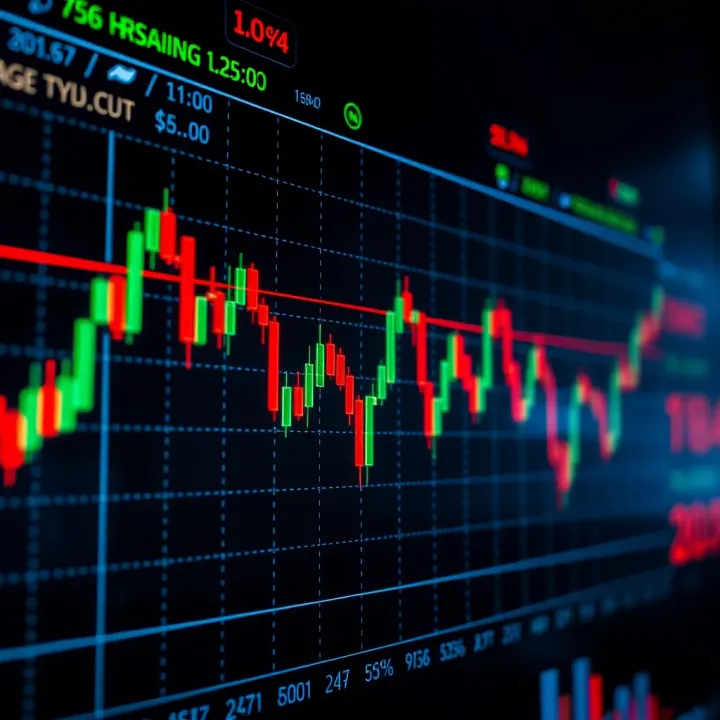
Reading candlestick charts is fundamental to technical analysis. Candlestick charts visually represent the price action of a cryptocurrency over a specific period. Each 'candlestick' shows the opening, closing, highest, and lowest prices within that timeframe. For instance, if the candlestick is green or hollow, it means the price closed higher than it opened, signalling buying pressure. Conversely, a red or filled candlestick indicates selling pressure.
For Nigerian traders, recognising these patterns helps to pinpoint entry and exit points effectively. Since the crypto market operates 24/7, monitoring candlestick charts on platforms like Binance or Remitano allows you to catch short-term opportunities during volatile hours, such as the early hours when crypto activity spikes globally.
Identifying market trends is about spotting the general direction a cryptocurrency’s price is moving over time—whether upward (bullish), downward (bearish), or sideways (consolidation). Trends offer clues about market sentiment and potential reversals. For example, a steady uptrend with higher highs and higher lows suggests positive momentum, which might encourage you to buy or hold.
In Nigeria’s volatile environment, understanding trends can protect you from sudden naira depreciation impact or abrupt government policy changes that affect crypto prices. Following the trend means you don’t swim against the current, reducing the risk of costly mistakes.
Moving averages smooth out price data by creating an average price over a set period, such as 20 or 50 days. The most common types are the simple moving average (SMA) and exponential moving average (EMA). For instance, if the short-term SMA crosses above the long-term SMA, it could signal a buying opportunity.
In Nigeria, moving averages help filter out market noise caused by intense speculative trading and naira volatility, giving you a clearer picture of genuine price direction.
Relative Strength Index (RSI) measures the speed and change of price movements on a 0 to 100 scale. An RSI above 70 suggests an asset is overbought and might correct soon, while an RSI below 30 indicates oversold conditions, often a buying chance. For example, if Bitcoin’s RSI dips below 30 during a market dip, it could hint at a potential rebound.
RSI is handy for Nigerian traders to gauge whether local market enthusiasm or panic has pushed prices too far in either direction.
MACD (Moving Average Convergence Divergence) shows the relationship between two moving averages and helps spot momentum shifts. It consists of the MACD line, signal line, and histogram. When the MACD line crosses above the signal line, that’s a bullish sign; the opposite crossover signals potential selling.
Using MACD, Nigerian traders can identify moments when momentum is building or fading, helping to time trades better, especially during ember months when markets can become unpredictable.
Technical analysis is not a magic wand but a toolkit. Nigerian traders who combine charts, trends, and indicators can make smarter decisions that suit local market quirks and increase their chances of profitable trading.
In crypto trading, managing risk is as important as spotting the next big coin to buy. Nigerian traders face unique challenges such as volatile naira exchange rates and regulatory uncertainties. Without solid risk control measures, a promising trade can quickly turn sour, especially given how fast crypto markets move here. Protecting your investment through practical tools like stop-loss orders and proper trade sizing ensures that losses don’t wipe out your capital and profits are locked in before market swings undo your gains.
How to limit losses: A stop-loss order is your safety net against unexpected market dips. By setting a stop-loss, you instruct the exchange to automatically sell your asset if its price falls below a specified level. For instance, if you buy Bitcoin at ₦25 million, setting a stop-loss at ₦23 million limits potential losses to ₦2 million. This prevents emotions from pushing you to hold on to a falling asset in hope of a rebound, which can sometimes never come.
Securing profits at the right time: Similarly, take-profit orders allow you to lock in gains once an asset reaches a target price. Say you bought Ethereum at ₦800,000; placing a take-profit at ₦1 million ensures you realise that profit automatically without waiting for market changes. This strategy is helpful in the fast-moving Nigerian crypto markets where prices can swing wildly during ember months or political events, ensuring you don’t lose gains by holding on too long.
Choosing trade sizes: Deciding how much to invest in a single trade is crucial. Instead of risking your entire ₦500,000 capital on one coin, it’s wiser to allocate a manageable portion like ₦100,000 per trade. This way, even if a particular trade fails, your overall portfolio remains intact. The principle of only risking a small percentage of your capital per trade helps avoid catastrophic losses.
Avoiding overexposure to one asset: Concentrating too much on a single cryptocurrency increases risk, especially in Nigeria’s unpredictable market. Diversify across different coins like Bitcoin, Binance Coin, and stablecoins such as USDT to spread risk. For example, if BTC drops, your holdings in other assets might soften the impact. Diversification mitigates against sector-specific downturns and regulatory clampdowns affecting one token.
Impact of naira fluctuations on crypto trades: The naira’s frequent volatility affects how you calculate profits and losses. Suddenly, ₦1 million worth of Bitcoin might fluctuate dramatically not because of Bitcoin’s price, but due to naira depreciation. Traders need to factor in these currency swings when timing their entries and exits.
Using USDT and stablecoins effectively: Stablecoins like USDT peg to the US dollar, offering a shield against naira instability. Keeping some assets in USDT during uncertain periods protects your portfolio from naira weakness. When you convert ₦ to USDT, your crypto holdings maintain value regardless of naira dips, making it easier to plan trades and preserve wealth.
Risk management is not just about avoiding losses but preserving your ability to trade consistently and profit over time. For Nigerian traders, combining stop-loss orders, savvy position sizing, and smart use of stablecoins builds a strong defence against market and currency shocks.
Navigating the Nigerian crypto market requires more than just understanding trading strategies; practical tips tailored to the local context make a huge difference. Factors such as regulatory shifts, naira volatility, and the unique fintech ecosystem directly affect how you trade. This section provides clear guidance to help you stay ahead and protect your investment within Nigeria’s dynamic crypto space.
The Nigerian regulatory environment around cryptocurrencies remains fluid. While the Central Bank of Nigeria (CBN) in early 2021 restricted banks from facilitating crypto transactions, trading itself isn’t illegal. However, various agencies like the Securities and Exchange Commission (SEC) have started to develop frameworks to regulate crypto investments more formally. Knowing these developments keeps you informed about what’s acceptable and how it could impact your trading.
To stay compliant, regularly check updates from the CBN, SEC Nigeria, and recognised authorities. Always ensure your transactions comply with anti-money laundering (AML) and know your customer (KYC) requirements. Using licensed platforms like Binance NG or Remitano can help avoid issues. Remember, trying to evade official channels or engaging with unregulated entities exposes you to legal risks and fund losses.
Emotional trading is one of the quickest ways to lose money. Many traders jump into panic selling when the market dips or greedily buy at peaks, only to regret later. Staying disciplined means setting clear entry and exit plans, and sticking to stop-loss limits even when the naira exchange rate fluctuates. For instance, if the naira weakens sharply, resist the urge to sell hastily without checking the overall market trend.
Scams and fake projects abound in Nigerian crypto circles, particularly with the rise of Ponzi schemes and bogus initial coin offerings (ICOs). Watch for red flags like unrealistic returns, unverifiable teams, or overly aggressive marketing. Vet projects thoroughly using community feedback and independent reviews before committing any funds. It’s safer to stick with well-established coins and platforms while you build your experience.
Funding your crypto account can be tricky due to naira controls and bank restrictions. Thankfully, platforms like Flutterwave and Paystack have bridged some gaps by enabling easy top-ups and withdrawals linked to bank accounts. Using these services can simplify your deposit process and reduce waiting time for transactions to clear, especially when funding your account with naira via stablecoins like USDT.
Fintech companies also enhance overall access by providing seamless payment integrations and mobile-friendly wallets. For example, apps like OPay and PalmPay let users convert naira to crypto assets smoothly without running into the typical banking delays. This ease of access encourages more Nigerians to participate in crypto trading with less friction and greater control over their funds.
Staying practical requires understanding not just the markets, but also the local environment affecting your trades. Keep up with rules, avoid emotional traps, watch for scams, and use fintech to your advantage.
These steps can help protect your investment and grow your trading skills amid Nigeria’s unique challenges and opportunities.
Discover the best crypto trading bots for Nigerian traders 🤖. Learn key features, benefits, and tips to boost your crypto trades effectively in Nigeria 🇳🇬.
Explore top crypto trading apps in Nigeria 🔍, compare features, security, fees, and user experience to find the perfect fit for your crypto journey 🇳🇬📱

Explore crypto trading in Nigeria 🔍 with easy-to-follow strategies, market insights, risk tips, and guidance on choosing crypto exchanges safely📱.

Explore how to pick the best crypto trading bot for Nigerian investors 💹 Learn bot operations, benefits, limits, and smart tips to trade smarter and safer 🔍
Based on 14 reviews