

Benefits of Risk Management for Nigerian Businesses
Discover how effective risk management in Nigeria helps protect businesses from threats, enhances decision-making, controls costs, and supports growth 📊🔒
Edited By
Sophie Bennett
Risk management in finance is a vital practice for Nigerian businesses aiming to survive and thrive in a volatile economy. From currency fluctuations to fluctuating fuel prices and irregular power supply, firms face unpredictable financial risks daily. Understanding these risks and managing them smartly can shield companies from losses and help sustain growth.
Businesses in Nigeria encounter several specific financial risks including foreign exchange risk due to naira instability, credit risk especially for SMEs relying on bank loans, and operational risks linked to supply chain disruptions or power outages. For instance, a Lagos-based manufacturer sourcing raw materials from abroad may suddenly pay significantly more for imports during naira depreciation, hitting profit margins hard.

Practical risk management starts with identifying and measuring these risks carefully. Financial teams can use techniques such as sensitivity analysis to gauge how changes in exchange rates or interest rates affect cash flows. Tools like Value at Risk (VaR) may also help estimate potential losses within a given period, although adaptations are needed for the Nigerian market's unique volatility.
Regulatory frameworks from the Central Bank of Nigeria (CBN) and Securities and Exchange Commission (SEC) place guidelines on financial institutions and businesses to ensure prudent risk controls. Nigerian firms should stay updated on these regulations and adjust their risk policies accordingly to avoid penalties and enhance investor confidence.
Technology plays another growing role. Mobile banking, fintech platforms like Paystack and Flutterwave, and cloud-based risk analytics offer faster data insight, helping decision-makers spot emerging risk trends early. For example, real-time monitoring of sales and expenses through POS terminals or mobile apps can flag worrying cash flow issues before they escalate.
Nigerian businesses that integrate clear risk evaluation methods, align with local regulations, and adopt relevant technology tools will be better equipped to face financial uncertainties.
In the next sections, we will explore specific risk types, practical mitigation strategies, and how Nigerian businesses can implement them effectively to protect their financial health.
Risk management in Nigerian finance is not just a theoretical concept but a practical necessity, especially with the unpredictable economic climate. Nigerian businesses face unique challenges like currency swings, regulatory shifts, and infrastructural gaps that can quickly erode profits or even threaten survival. A strong risk management approach helps companies anticipate these challenges and build resilience.
Take, for example, a manufacturing firm in Lagos dealing with erratic naira exchange rates. By actively managing risk, the company can decide the right time to hedge foreign currency exposure or negotiate contract terms, reducing costly surprises. Similarly, banks and investment firms benefit from risk management by staying compliant with Central Bank of Nigeria (CBN) guidelines while protecting their clients’ funds.
Nigeria often experiences unpredictable economic swings caused by oil price shocks, inflation, and foreign exchange shortages. Businesses suffer when the naira weakens sharply, making imported inputs costlier or reducing buying power. For instance, a retailer importing electronics may face sudden price hikes, forcing them to either increase selling prices or accept lower margins. This volatility demands agile risk strategies to navigate cash flow uncertainties.
Regulatory policies in Nigeria, such as changes in tax laws or import restrictions, can disrupt business operations unexpectedly. Market risks, like shifts in consumer preference or intense competition from local and foreign players, also affect profitability. For example, a fintech start-up must comply with NCC regulations while continuously innovating to stay relevant. Failing to manage these risks can lead to fines, lost market share, or weakened brand reputation.
Protecting physical and financial assets safeguards a business against losses that could force closure. Power outages and theft remain major hazards in Nigeria; thus, companies invest in generators or security services as part of their risk plan. Furthermore, contingency planning ensures operations can continue despite disruptions like flooding or strikes. A food processing company with backup suppliers and production plans can maintain supply even during crises, preserving customer trust.
Lending in Nigeria involves significant risk due to borrower defaults, partly driven by economic instability. Banks and microfinance institutions constantly assess clients’ creditworthiness to avoid non-performing loans. Small businesses, especially informal ones, often struggle to access affordable credit because of this risk, limiting growth. Effective credit risk management includes thorough background checks, collateral requirements, and regular portfolio reviews.
Liquidity risk is common when businesses cannot quickly convert assets to cash or face delays in payments. For instance, a trader in Abuja might struggle to access enough working capital because customers delay settling invoices or banks impose restrictions on withdrawals. This situation forces companies to keep larger cash reserves or find alternative financing, which can be costly.
Operational risks refer to losses from failed processes, systems, or external events. In Nigeria, unreliable power supply, poor infrastructure, and security concerns raise these risks. For example, frequent NEPA/DISCO outages compel businesses to rely on costly generators, increasing operating expenses. These risks require ongoing assessment and investment in mitigating measures such as staff training and robust IT systems.
The naira’s instability often pushes inflation rates up, eroding purchasing power. Import-dependent companies see their costs rise unpredictably, squeezing margins. For example, an agricultural firm importing fertiliser faces price hikes from both exchange rate depreciation and inflation, complicating budgeting. Managing these risks involves foreign exchange hedging, dynamic pricing, and maintaining local supply chains where possible.
Nigerian businesses that prioritise risk management position themselves to weather economic storms, safeguard assets, and sustain growth despite the country's financial challenges.
This pragmatic approach ultimately protects investments and helps build confidence among investors, lenders, and customers alike.
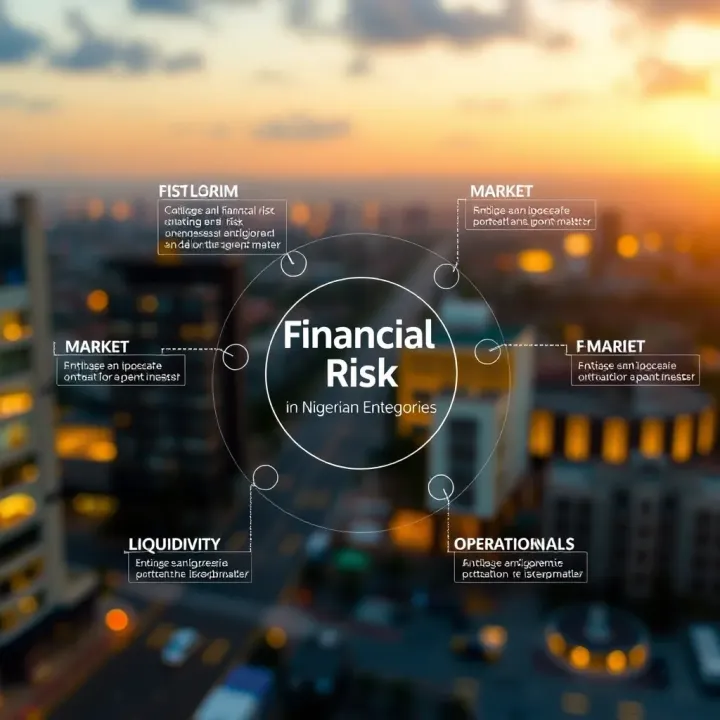
Identifying and assessing financial risks is the foundation of effective risk management for Nigerian businesses. Without a clear understanding of the specific risks a company faces, any attempt to manage or mitigate them becomes guesswork. Take, for example, a Lagos-based exporter dealing with foreign exchange volatility; failure to spot this risk early could quickly drain profits due to naira-dollar swings. Proper risk identification lets businesses prepare, while assessing the scale of each risk helps prioritise responses and allocate resources wisely.
Using risk registers and checklists helps keep financial risks visible and organised. A risk register is essentially a live document where all identified risks are logged with details like their nature, potential impact, and who owns the risk management process. Nigerian firms often use checklists tailored to their industry—say for banks including credit default and liquidity challenges or for manufacturing, supply chain disruptions. Regular updates to these tools ensure that emerging risks are captured and the team remains alert to shifts in the business environment.
Consulting with key stakeholders provides deeper insights into possible pitfalls that purely internal reviews might miss. Stakeholders such as suppliers, customers, regulators, and employees offer different perspectives on vulnerabilities. For instance, a retailer may learn from suppliers about potential delays during ember months or from customers about shifting payment behaviours influenced by inflation. Engaging stakeholders cultivates a broader understanding, often revealing risks otherwise overlooked and strengthening collaborative solutions.
Leveraging data analysis in risk detection involves sifting through financial transactions, market trends, and operational data to spot irregular patterns. With Nigerian fintech and big data capabilities growing, companies increasingly rely on analytics to detect early warning signs—like sudden spikes in loan defaults or unusual foreign exchange movements. Data-driven risk identification means businesses can react swiftly, avoiding being blindsided by issues that might not stand out in anecdotal observations.
Qualitative versus quantitative assessment offers two complementary ways to gauge risk. Qualitative methods use expert judgement, categorising risks by severity or likelihood, which suits scenarios where data is scarce or unreliable, such as political instability in certain Nigerian regions. Quantitative approaches assign numerical values—estimating potential losses in ₦ terms or probabilities—allowing for precise risk comparisons. For example, an investment firm might combine both by starting with expert scoring then refining with statistical models based on historical market data.
Calculating Value at Risk (VaR) enables businesses to estimate the maximum expected loss over a specific time frame, under normal market conditions. Though initially common among banks and investment funds, Nigerian companies in oil and gas or agriculture can also use VaR to understand potential downside. For example, an agribusiness can calculate VaR related to commodity price swings, helping in setting aside sufficient reserves or deciding on hedging strategies.
Stress testing and scenario analysis push risk assessment beyond routine conditions by imagining extreme but plausible events. This technique tested Nigerian banks extensively after the 2008 crisis, simulating sudden naira depreciation or liquidity crunches to check financial resilience. Other businesses can similarly apply stress tests—like a logistics firm evaluating impacts of fuel scarcity or security issues disrupting supply chains—ensuring preparedness for shocks that standard models might not capture.
Identifying and measuring risks isn’t a one-time tick box. It’s an ongoing process that sharpens a business’s ability to weather uncertainty and maintain steady growth despite Nigeria's dynamic economic environment.
Managing financial risks effectively is vital for Nigerian businesses to protect their assets and sustain growth amid an often unpredictable economic environment. By applying well-planned strategies, companies can reduce potential losses and make stronger decisions that align with their business goals. This section breaks down practical methods to handle risks, starting with avoidance, moving through transfer, and ending with active monitoring.
Rejecting high-risk investments involves steering clear of ventures or projects with unconscionable chances of failure or loss. For Nigerian businesses, this means avoiding deals in unstable sectors or ventures exposed to excessive currency fluctuations. For example, some startups may be tempted by high returns in speculative crypto-assets but often face volatility and regulatory uncertainty. Wise investors reject such options or approach them cautiously, safeguarding capital from steep losses.
Diversifying portfolios in Nigerian contexts helps cushion the blow when one investment underperforms. Instead of putting all funds in oil and gas—which Nigeria's economy heavily depends on—businesses should spread investments across different sectors: agriculture, fintech, manufacturing, and real estate. This mix lowers exposure to sector-specific shocks such as sudden oil price crashes or power supply disruptions that can paralyse a singular sector.
Implementing strong internal controls ensures that day-to-day operations follow clear policies designed to prevent fraud, errors, and inefficiencies. Nigerian SMEs and larger firms alike benefit from systematic financial checks, segregation of duties, and automated approvals. For example, requiring dual authorization for payments above a certain threshold limits opportunities for corruption, which remains a risk in some markets.
Using insurance products effectively allows businesses to pass certain financial risks to insurers. Nigerian firms often overlook comprehensive coverage beyond basic fire or theft insurance. However, products such as trade credit insurance can shield companies from customer defaults, while business interruption insurance protects against unforeseen stoppages, like power outages or civil unrest common in some regions.
Outsourcing certain activities to mitigate risks involves contracting specialised third parties to manage functions where the business lacks expertise or faces variable demands. For instance, hiring a trusted external accountant or IT security firm in Lagos can reduce operational risks and avoid the pitfalls of in-house mismanagement. Outsourcing also brings flexibility without the overheads of permanent staff.
Partnering with financial institutions for risk sharing is a practical method seen when Nigerian businesses collaborate with banks or microfinance institutions for loans secured by guarantees or pooled funds. This partnership not only helps spread risk but also improves access to capital, especially given the cautious lending environment post-COVID disruptions.
Setting risk appetite and tolerance levels defines how much risk a business can bear without threatening its survival. Nigerian firms should establish concrete limits—such as maximum exposure to foreign currency debt considering the naira’s frequent volatility. Clear risk appetite guides decision-making and prepares management to accept certain risks while avoiding reckless choices.
Continuous tracking and reporting mechanisms provide timely information on risk exposures and emerging threats. Nigerian businesses using digital tools like fintech platforms or internal dashboards can monitor cash flow, credit risks, or compliance issues in real time. This ongoing oversight supports quick corrective action, reducing the chance of small issues spiralling out of control.
Responding dynamically to emerging risks means adjusting strategies whenever new risks surface, such as changes in government policy or sudden market shocks. Companies with agile risk management respond by revising budgets, renegotiating contracts, or shifting investments. For example, during fuel price hikes affecting logistics costs, several businesses have adapted by renegotiating transport tariffs or adopting cost-saving technologies.
Effective risk management requires a mix of rejecting unwise risks, spreading exposure, protecting assets through transfers, and keeping close watch on changing conditions. Nigerian businesses that apply these principles tend to survive shocks better and seize opportunities with confidence.
Understanding the regulatory environment is vital for Nigerian businesses managing financial risks. Government agencies and regulatory bodies set rules that help shape market behaviour, reduce fraudulent activities, and ensure financial stability. Nigerian businesses that align with these rules generally reduce their risk exposures and build trust with investors and customers alike.
The Central Bank of Nigeria (CBN) plays a central role in shaping risk management practices for banks and other financial institutions. Its guidelines demand that banks maintain adequate Capital Adequacy Ratios (CAR) and conduct regular stress tests. For example, CBN’s circular on operational risk management requires banks to put in place strong controls, including internal audits and fraud prevention measures. These requirements help banks avoid insolvency and guide them through Nigeria’s often volatile economic cycles.
On the other hand, the Securities and Exchange Commission (SEC) oversees capital market participants such as brokers, asset managers, and companies listed on the Nigerian Exchange (NGX). SEC policies focus on transparency, investor protection, and market fairness. For instance, SEC mandates regular disclosures and financial reporting, which help detect early signs of potential risk like liquidity shortages or governance issues. This makes it easier for investors to make informed decisions and for firms to maintain regulatory compliance.
Together, CBN and SEC's frameworks offer a backbone for financial stability, reducing systemic risks and safeguarding stakeholder interests.
Financial institutions in Nigeria face strict compliance rules designed to curb fraud, money laundering, and other risks. These requirements often involve regular submission of reports, adherence to prudential standards, and compliance monitoring. For example, many banks face hefty fines if they fail to meet AML (anti-money laundering) standards or if they neglect customer data protection. Failure here can bring not only regulatory penalties but also reputational damage, affecting customer loyalty and business growth.
Meeting compliance demands lets Nigerian firms operate smoothly and avoid costly disruptions, which explains why risk managers prioritise compliance frameworks in their overall strategies.
Anti-money laundering (AML) and KYC standards form critical components of the Nigerian financial regulatory landscape. These standards require businesses, especially banks and fintech firms, to verify the identities of their customers (KYC - Know Your Customer) and monitor transactions to spot suspicious patterns. Considering the country’s historic challenges with corruption and illicit funds, adhering to AML and KYC proves essential to avoid regulatory crackdowns and preserve market credibility.
Understanding tax-related financial risks also matters. Nigerian tax laws can be complex and often change, especially with State and Federal tax authorities imposing levies like VAT, withholding tax, and PAYE. Businesses that do not properly manage tax compliance face penalties or unexpected liabilities. Preparing for this complexity helps companies better forecast cash flows and avoid surprises during ember months when tax authorities become more active.
Lastly, adhering to consumer protection regulations ensures that businesses treat customers fairly and transparently. Nigerian laws now require clear communication about loan terms, fees, and data usage. Non-compliance can trigger legal suits or sanctions by agencies like the Consumer Protection Council, which can negatively impact brand reputation and customer retention.
Nigerian businesses that actively manage legal and compliance risks build resilience and sharpen their competitive edge, ensuring longevity in a dynamic business environment.
By keeping these regulatory demands in view, Nigerian enterprises strengthen their risk management frameworks while navigating the complex financial landscape with greater confidence.
Technology has reshaped how Nigerian businesses approach financial risk management. With the increasing complexity of financial markets and rapid digitisation, firms now depend on digital tools to better identify, monitor, and respond to risks. These innovations not only increase efficiency but also help reduce human error and enhance decision accuracy. Considering Nigeria’s dynamic economic environment and infrastructural challenges, technology’s role in risk management becomes even more relevant.
Fintech companies like Paystack, Flutterwave, and OPay provide platforms that compile financial data in real time. Nigerian businesses can use these tools to see where their exposure lies, from payment collections to credit facilities. For instance, a retailer using Flutterwave can monitor transaction patterns to spot unusual activities that may hint at fraud or cash flow strain. These platforms often integrate risk metrics directly, making risk tracking seamless without the need for bulky manual reports.
Automation helps businesses stay alert to emerging risks without constant manual checking. Dashboards configured to send alerts when key indicators cross thresholds allow managers to react quickly. For example, a bank might set up alerts for unusual withdrawal volumes or liquidity dips using automated systems. This approach saves time and ensures that critical signals are not missed, which is crucial given Nigeria’s volatile naira exchange rates and inflation pressures.
Access to rich datasets from digital sources enables Nigerian businesses to make better risk-based decisions. Analytical models feeding on data such as consumer behaviour, market prices, and regulatory changes help predict potential financial threats. For example, an investment firm may apply algorithmic models to adjust portfolios based on projected currency movements or inflation trends. This reliance on data aids businesses in moving beyond gut feelings to strategic, evidence-backed choices.
As financial institutions grow more digital, they face heightened risks of cyberattacks. Nigeria’s growing fintech scene has seen cases of data breaches and digital fraud, sometimes resulting in significant financial losses. Companies must strengthen cybersecurity measures, including firewalls, encryption, and employee training, to guard against attacks. Failure to do so could undermine customer trust and lead to regulatory penalties.
With increasing digital transactions, protecting personal and financial data has become vital. Businesses must ensure compliance with Nigerian data protection regulations like NDPR (Nigeria Data Protection Regulation). Besides legal requirements, maintaining data integrity—accuracy and reliability—is essential to generate valid risk assessments. Corrupted or falsified data could lead to wrong risk evaluations, causing poor decision-making.
While technology offers many benefits, firms must balance adopting new solutions with maintaining solid risk controls. For example, jumping into emerging tools like blockchain or AI without proper vetting can expose firms to unforeseen risks. Nigerian companies should pilot technological innovations carefully, integrating robust oversight mechanisms to prevent operational lapses while benefiting from efficiency gains.
Embracing technology in financial risk management is no longer optional; it's a necessity. However, it demands equal measures of vigilance and prudence to ensure technology protects rather than exposes businesses in Nigeria's unique market environment.
Discover how effective risk management in Nigeria helps protect businesses from threats, enhances decision-making, controls costs, and supports growth 📊🔒

📱 New to trading in Nigeria? Discover how to pick the best trading app with key features, user tips, and local rules to trade smartly and safely.

🤖 Learn how binary bots work in binary options trading, the risks involved, and key tips for Nigerian traders looking to use automated tools effectively.

Explore top Nigerian trading apps 📱 with ease! Detailed guide on features, costs, security, and support for all skill levels to choose your perfect fit.
Based on 7 reviews