

Top Forex Trading Strategies for Nigerian Traders
Discover effective forex trading strategies for Nigerian traders 🇳🇬. Learn risk management, key tools, and approaches to boost your trading success 📈.
Edited By
Isabella Knight
In forex trading, the term swap refers to the interest paid or earned when positions are held overnight. Simply put, if you keep a trade open beyond the trading day, you either pay or receive a small fee based on the interest rate difference between the two currencies involved.
For Nigerian traders, swaps can significantly impact trading costs, especially for those who hold positions for days or weeks. This daily charge or credit could either eat into your profits or add a little extra, depending on the currencies and your trading direction.

Understanding swaps is not just about knowing a technical term; it affects how you plan your trades and manage your capital. For instance, keeping a position open on USD/NGN or EUR/USD pairs may involve paying swap fees if Nigeria’s monetary policy rate is lower than that of the US or Europe.
Swap rates reflect the interest rate gap between two currencies, making them particularly relevant for long-term strategies like swing trading or position trading.
Here are key points Nigerian traders should know about swaps:
Interest Rate Basis: Swaps depend on the central banks’ interest rates of the currencies involved. Since Nigeria’s CBN rate can differ considerably from the Federal Reserve in the US or the European Central Bank, swap values vary by pair.
Long vs Short Positions: If you buy a currency with a higher interest rate relative to the one you sell, you typically earn swap interest. If the reverse happens, you pay swap fees.
Cost Management: Swap fees can accumulate quickly. For example, holding a USD/NGN trade over two weeks could add up to a notable cost given naira’s volatility and Nigeria’s interest rates.
Swap-Free Accounts: Some brokers offer Islamic or swap-free accounts that avoid these charges, which some Nigerian traders prefer for religious or cost reasons.
Knowing how swaps work helps Nigerian traders to decide when to close trades or plan holding periods, ensuring costs do not chip away quietly from their capital.
Understanding swap is essential for anyone serious about forex trading, especially Nigerian traders who often hold positions overnight or longer. Swap represents the interest you either pay or earn for keeping your trade open past the daily cut-off time, usually 5 pm New York time. Unlike straightforward commission fees or spreads, swap directly impacts your trading profitability depending on the currency pair, interest rates, and position size.
Swap, sometimes called rollover, is the fee or credit applied when you hold a forex position overnight. Essentially, when you buy one currency and sell another, you’re borrowing one currency and lending the other. Each currency has an associated interest rate set by its central bank. The swap charge reflects the difference between these rates. For example, if you buy USD/NGN and hold the position overnight, the swap will be influenced by interest rates set by the Central Bank of Nigeria (CBN) and the US Federal Reserve.
Swap can be positive or negative depending on whether you earn higher interest on the currency you hold than the one you owe. Traders aiming to profit from these interest differences often engage in carry trades, but for most Nigerian retail traders, swap often adds to costs.
When you open a trade in forex, you simultaneously buy one currency and sell another. If you keep that trade open past the broker's daily rollover time, swap kicks in. Brokers credit or debit your account based on the interest rate gap between the two currencies involved.
For example, let’s say you’re trading EUR/USD. If the European Central Bank’s interest rate is higher than the US Fed rate, holding a long EUR/USD position overnight might earn you a small credit. Conversely, a short position would likely generate a debit, representing the cost of holding the trade.
For Nigerian traders, it’s crucial to remember that swap is charged daily for all positions held overnight—this can add up quickly, especially when naira volatility influences interest rate spreads.
Swap differs from spread and commission, which are immediate transaction costs. The spread is the difference between the buying and selling price when you open or close a trade, and commissions are fixed fees some brokers charge per trade.
Swap, however, is a financing cost that applies only to trades held overnight. Unlike commission or spread, it can either increase or reduce your account balance over time, depending on whether the swap is positive or negative.
It’s important for Nigerian traders to factor swap into their risk management strategies to avoid unexpected costs. For example, a position held for several days might attract a cumulative swap fee that eats into potential profit, especially during periods of high naira exchange rate fluctuations or changing monetary policies by the CBN.
In summary, grasping the role of swap in forex trading helps Nigerian traders make better decisions, manage costs, and improve overall trading results.
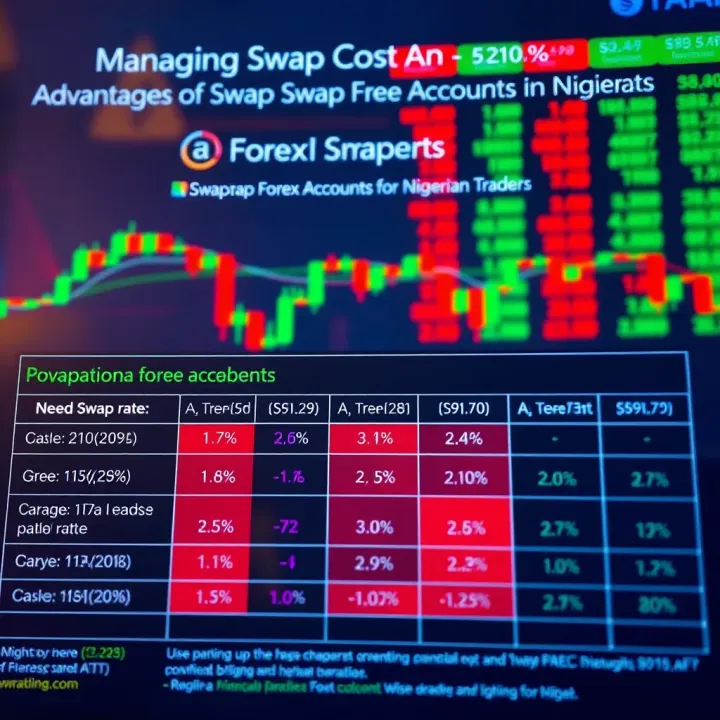
Understanding how swap rates are calculated is vital for Nigerian traders who want to manage their trading costs effectively. The swap rate defines the cost or gain for holding a currency position overnight and can significantly affect profitability, especially for long-term trades. Two main factors influence these rates: the interest rate differential between currency pairs and variations set by brokers.
Swap rates primarily hinge on the difference in interest rates set by the central banks of the currencies involved. For example, if you trade USD/NGN, the interest rate set by the Federal Reserve in the US versus the Central Bank of Nigeria (CBN) impacts the swap. If the US interest rate is higher than Nigeria's, holding a USD long position may earn swap credits, while the opposite direction incurs costs.
Let's say the US Federal Reserve sets its rate at 5%, while the CBN is at 11.5%. This difference means traders who hold positions involving NGN might generally face higher swap costs when going long on the naira against the dollar because of the larger Nigerian rate. This difference is adjusted daily in the swap calculation, affecting whether traders pay or earn swap charges.
It’s not just the interest rate differential. Brokers add their own twist. Nigerian traders must understand that different brokers apply varied swap rates influenced by their policies, liquidity providers, and spreads. Spread—the difference between the buying and selling price—can subtly impact swap calculations.
For example, two brokers might quote similar currency pairs but charge different swap rates. One broker may also factor in a fixed markup on swaps, affecting the final cost or credit credited to your account. Traders who use popular brokers in Nigeria like FXTM, Alpari, or OctaFX should compare swap rates before committing capital.
Swap calculations often include a rollover fee charged at 5 pm EST (10 pm WAT), but the broker’s policies can affect the exact time and charges.
It's wise to check the broker’s published swap rates and terms and consider how spreads widen during volatile hours, such as ember months or during major economic announcements. These factors combine to influence the actual swap costs Nigerian traders face, making it essential to shop around and plan trades accordingly.
In summary, knowing how swap rates form gives traders an edge. By tracking interest rate differences and choosing brokers with favourable swap policies, Nigerian forex participants can better manage trading expenses and improve their bottom line.
Swap rates play a major role in shaping how traders manage their positions over time, especially in the Nigerian forex market where every cost counts. Understanding how swaps influence trading strategies can help you protect your profits or even make gains by holding positions overnight.
When you keep a forex position open overnight, your broker either charges or pays you a swap fee. This happens because forex trades involve borrowing one currency to buy another, and the difference in interest rates between these currencies determines the swap cost. For instance, if you buy USD/NGN and the interest rate in Nigeria is higher than the US, you might receive a swap payment. On the flip side, holding a position against the interest rate differential means paying a swap fee, which can chip away at your profits over time.
Consider a trader who holds a long EUR/USD position overnight. If the eurozone rate is lower than the US rate, this trader will pay swap fees daily. Over several nights, this cost can grow, reducing overall profit or even triggering losses where price movements don’t offset the swap cost.
The carry trade strategy relies heavily on swap. Traders borrow in a currency with low interest and invest in one with higher interest to earn the difference. Nigerian traders might find opportunities in currency pairs like USD/TRY (US Dollar/Turkish Lira) or USD/ZAR (US Dollar/South African Rand), where the interest rate gap can be quite wide. However, currency volatility and political risks in these markets can wipe out carry trade gains quickly.
Long-term positions are similarly affected. A trader holding Naira-exposed positions must consider that Naira's volatility and Central Bank of Nigeria (CBN) policy changes can influence swap rates unpredictably. If you plan to hold trades for weeks or months, accumulating swap costs might become a hidden expense or a consistent income depending on position and market conditions.
Nigerian traders face unique challenges because of the Naira’s frequent fluctuations and the Central Bank’s interventions. Swap rates on pairs involving NGN can swing wildly, especially during embargoes or currency controls. At the same time, local banks and brokers might offer swap-free accounts, catering to traders who prefer not to deal with swap fees due to religious reasons or cost control.
Practical tips include:
Always check your broker's swap rates and policies before entering long-term trades.
Monitor CBN announcements and Naira volatility, as these can quickly affect your swap costs.
Consider swap in your overall trading plan, especially if you hold positions during Nigeria’s peak market activity seasons like the ember months.
Swap is not just a small fee—it can change the profitability of your strategy. For Nigerian traders, understanding when swap turns from cost to gain ensures smarter, more profitable decisions.
In summary, swap impacts overnight holding costs, shapes carry trade opportunities, and requires particular attention by Nigerian traders due to local currency and regulatory factors. Approaching swap with insight improves your chances of managing risks and boosting profits effectively.
In forex trading, swap costs can affect your profit margins if not handled properly. For Nigerian traders, managing these costs is vital because the naira’s fluctuating value and interest rate variations make swaps particularly impactful. Understanding and controlling swap charges helps in preserving capital, especially for those holding positions overnight or running long-term trades.
Swap-free accounts help traders avoid overnight interest charges usually applied when positions are kept open past the trading day. These accounts, often called Islamic or Sharia-compliant accounts, are available through some brokers serving the Nigerian market. They suit traders who prefer not to deal with interest either for religious reasons or to dodge cumulative swap costs. While swap-free accounts remove these fees, brokers may charge slightly higher spreads or additional commissions to balance the cost. It’s important to check with brokers like FXTM, Alpari, or local affiliates to confirm swap-free options and their terms.
Swap rates differ among currency pairs owing to the interest rate differences set by central banks. Nigerian traders should lean toward pairs offering positive or minimal negative swaps. For instance, trading USD/NGN might attract higher swap costs because of naira’s volatility and CBN’s monetary policies. However, pairs like USD/JPY or EUR/USD generally provide lower swap charges due to stable interest rates in those economies. Selecting these pairs for longer-term positions helps reduce negative swap impacts. Always check the current swap rates provided by your broker since these values can change with market conditions.
The timing of your trade can affect how much swap you pay. Swap fees apply when positions roll over at the end of the trading day, typically at 5 pm New York time. Nigerian traders should plan exits or entries around this time to avoid unexpected swap charges. Some traders close positions just before rollover and re-enter after, thus avoiding a negative swap day’s fee. Also, swaps triple on Wednesdays to compensate for the weekend when markets are closed, making midweek rollovers costly. Being aware of these timings and planning trades accordingly can save significant amounts over time.
Managing swap costs wisely is not just about lowering fees but improving your overall trading edge—smart choices lead to better returns.
In summary, Nigerian traders can improve profitability by using swap-free accounts when appropriate, choosing currency pairs with lower swap costs, and timing trades to dodge unfavourable swap charges. These practical steps, combined with good broker research, give you better control over costs tied to overnight currency positions.
Understanding the regulatory environment and market dynamics in Nigeria is vital for forex traders who want to navigate swap costs effectively. Swap rates do not exist in a vacuum; they respond sharply to local policies and market conditions, which in Nigeria’s case, present unique challenges and opportunities. This section explores two major factors influencing swaps: Central Bank of Nigeria (CBN) policies and naira volatility.
The Central Bank of Nigeria plays a direct role in forex trading costs through its monetary policies and currency controls. The CBN regulates the flow of foreign exchange, which can affect liquidity and the demand-supply balance for the naira. For example, tight foreign exchange restrictions or limits on currency remittances could squeeze forex brokers’ access to dollars, making swaps more expensive as brokers factor in higher financing costs.
Moreover, the CBN’s Monetary Policy Rate (MPR) influences interest rate differentials between the naira and other currencies. Since swap calculations depend on these interest differentials, a rise or fall in the MPR can increase or reduce swap costs. For instance, when the CBN raised the MPR to 18% in recent years, holding positions in naira pairs usually attracted higher positive swaps if the foreign counterpart had a lower rate. However, this dynamic may quickly change if the CBN revises its policy or loosens currency controls.
Nigerian traders must also watch for policy announcements, such as adjustments to the official exchange rate or the supply of forex to authorised dealers. Sudden regulatory moves can quickly impact swaps by shifting market sentiment and liquidity.
Naira volatility directly affects swap rates because unstable currency behaviour leads to fluctuating interest rate expectations and risk premiums. For example, during periods when the naira weakened sharply against the US dollar, brokers tended to widen spreads and increase swap charges to protect themselves against potential losses.
In practical terms, a trader holding a long naira position overnight during a volatile period may face higher negative swaps due to the elevated risk premiums. Conversely, traders on the right side of currency movements might benefit from positive swap adjustments.
Volatility also impacts long-term trading strategies. Nigerian traders who hold positions for days or weeks must factor in swap costs that could gradually erode profits, especially in pairs involving the naira. This is particularly true during the ember months when forex markets sometimes experience heightened activity and uncertainty.
Swap costs in Nigeria are not just fees; they are reflections of underlying economic policies and market realities. Staying informed on CBN policies and naira trends helps traders anticipate and manage these costs better.
By keeping a close eye on regulatory announcements from the CBN and monitoring naira stability, forex traders in Nigeria can better plan their trades and avoid unexpected losses from swap fees. Combining market knowledge with sound risk management will make trading in the Nigerian forex landscape more predictable and profitable.
Discover effective forex trading strategies for Nigerian traders 🇳🇬. Learn risk management, key tools, and approaches to boost your trading success 📈.

📈 Discover the best times for forex trading in Nigeria by understanding global sessions, key currency pair activities, and strategies to manage risks effectively.

Discover top forex trading indicators 📊 tailored for Nigerian traders 🇳🇬. Learn how to combine tools for smarter, more accurate trading decisions!

📈 Discover practical forex trading insights and proven strategies tailored for Nigerian traders. Master risk, choose brokers wisely, and thrive in local markets.
Based on 6 reviews