

Realities of Forex Trading in Nigeria
📉 Explore the real risks and smart strategies of forex trading in Nigeria. Learn how market mechanics and local factors can make or break your ₦ success.
Edited By
Oliver Mills
Forex trading offers Nigerians a chance to grow their money by trading currencies like the US dollar, euro, and British pound against the naira. While the market operates 24/5 globally, understanding how it works requires solid learning. PDFs provide a convenient way to grasp forex essentials without getting lost in jargon or costly courses.
This guide leverages PDF resources tailored for beginners and those with some trading experience. PDFs let you learn at your own pace, revisit concepts often, and access structured content offline.

Accessibility: You can download and study forex materials anytime, even without stable internet.
Structured Knowledge: Good PDFs arrange topics logically, making it easier to build on previous lessons.
Local Relevance: Several PDFs focus on the Nigerian forex scene, discussing challenges like naira volatility and CBN regulations.
Cost-Effective: Many quality PDF guides are free or cheaply available, unlike expensive seminars.
Forex trading is not magic; it demands understanding of currency pairs, market behaviours, and disciplined strategies. PDFs offer a practical starting point to gain this knowledge without confusion.
When selecting a PDF for forex learning, pay attention to:
Clear explanations of core concepts: Look for explanations of terms like pip, spread, leverage, and margin.
Practical examples: For instance, how a ₦500,000 investment can move with USD/NGN rate changes.
Charts and graphs: Visuals help especially with technical analysis.
Strategic tips: Guides that cover risk management and trade planning.
Updated information: Ensure the content reflects current market realities and Central Bank of Nigeria (CBN) policies.
Begin with PDFs that explain setting up trading accounts with popular Nigerian brokers, understanding currency pairs, and the basics of reading candlestick charts. Progressively, explore materials on indicators, chart patterns, and economically driven market moves.
This method helps you avoid guesswork and build confidence before investing actual naira. Remember, consistent learning is a key driver of success in the forex market.
By focusing on practical PDF resources, you equip yourself to make informed decisions and steadily grow your forex trading skills.
Grasping the fundamentals of forex trading sets the stage for successful investment and informs sound decision-making. This foundation helps traders, brokers, and analysts understand market behaviour, manage risks, and identify profit opportunities confidently. In Nigeria, where access to formal forex education can be limited, PDFs serve as practical tools for mastering these basics without expensive courses.
Forex trading, or foreign exchange trading, involves buying and selling currencies. The goal is to profit from fluctuations in exchange rates between currency pairs like the US dollar (USD) versus the Nigerian Naira (NGN). For example, if you anticipate the USD will strengthen against the NGN due to economic shifts, you buy USD/NGN and sell once the rate improves.
Unlike stocks or bonds, forex operates 24 hours a day on weekdays, reflecting global business hours. This continuous access means you can trade outside traditional Nigerian market hours but requires discipline to avoid burnout.
Forex markets differ from other financial markets mainly due to their liquidity and scale. The forex market is the largest globally, with daily transactions exceeding US$6 trillion. This liquidity means prices adjust quickly based on economic news, central bank policies, or geopolitical events, affecting currencies like the Euro (EUR) or British Pound (GBP).
Understanding key terms such as pips, lots, leverage, and margin is essential for effective forex trading. A pip measures the smallest price movement, often 0.0001 for most currency pairs. For instance, if the USD/NGN rate moves from 415.20 to 415.25, that’s a five-pip change. Lots refer to the size of the trade: a standard lot equals 100,000 units of the base currency.
Leverage allows you to control a large position with a smaller amount of capital, but it increases both potential profits and risks. For example, using 50:1 leverage means ₦10,000 can control ₦500,000 worth of currency. Margin is the collateral required to open this position.
Common forex pairs are categorised into majors, minors, and exotics. Majors like EUR/USD and GBP/USD are highly liquid and reflect strong global economies. Exotic pairs, such as USD/NGN or USD/ZAR, typically have higher spreads and volatility but can offer unique trading opportunities for those familiar with local economic factors.
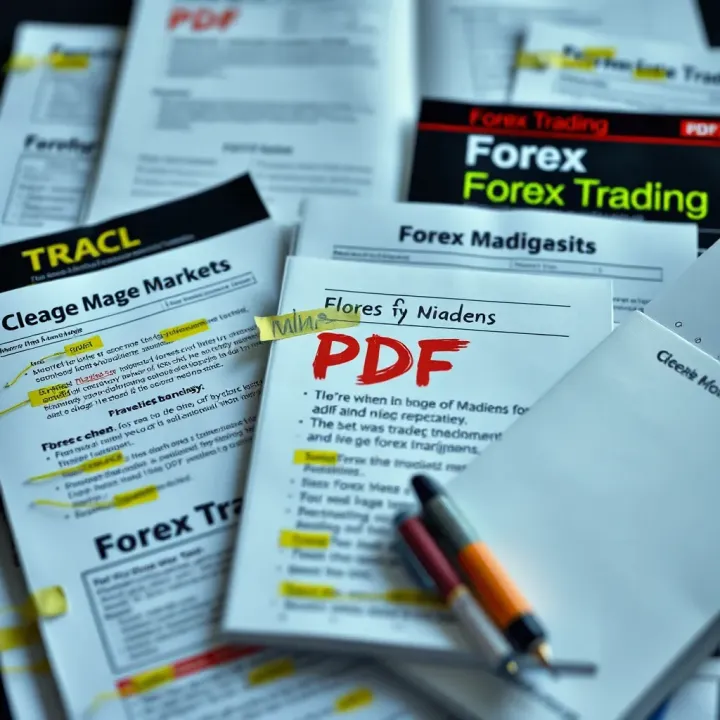
Familiarity with these terms empowers Nigerian traders to navigate the forex market confidently, especially when applying knowledge from PDF guides that break down complex concepts into bite-sized, practical lessons.
By focusing on these basics, traders avoid common mistakes like misjudging leverage or misreading currency dynamics, setting the groundwork for more advanced strategies and consistent profits.
Learning forex trading through PDFs offers several benefits that suit busy Nigerians who want to grasp the market without attending crowded seminars or expensive classes. PDFs provide a self-paced learning atmosphere where traders can pause and revisit complex ideas whenever necessary, making education more manageable alongside daily commitments.
Accessibility and convenience are key when starting your forex journey. You can download PDF materials on your phone, tablet, or laptop, and study anywhere—even on the danfo during your daily trips or when waiting at a mama put. Unlike live sessions, PDFs don’t require dedicated internet time or fixed schedules, which is ideal for those juggling multiple responsibilities or unreliable power supply common in many parts of Nigeria.
Structured and comprehensive content is another trait that makes PDFs especially valuable. Most quality forex trading PDFs compile everything from basic definitions to advanced strategies in one place. This arrangement helps you build knowledge logically, stepping through concepts without missing foundational details. For instance, a beginner can move from understanding pips and lots right up to risk management and technical indicators without jumping between scattered sources.
Finding credible PDFs matters significantly to avoid wasting time on outdated or misleading information. Reliable sources include established forex educators, respected online trading academies, and recognised financial institutions with a good track record. Some Nigerian fintech platforms, like Paystack and Flutterwave, occasionally share educational materials that resonate with local market conditions, making them excellent places to check.
When looking at a PDF, you should carefully evaluate content quality and relevance. Check the publication date to ensure strategies reflect current market realities, such as the impact of recent CBN policies or naira fluctuations. Also, assess whether the material explains concepts clearly without excessive jargon. A well-written guide should balance theory and practical examples, such as how to set stop-loss orders or read currency pair trends, making it relevant to your trading activities.
Always prefer PDFs that include real-world case studies or screenshots demonstrating trading platforms; such details often reveal whether the author understands practical market challenges.
In summary, forex trading PDFs offer a flexible, well-organised way to study. By choosing reputable, up-to-date documents, you set a strong foundation for your trading success in Nigeria’s unique financial environment.
Understanding core forex trading concepts is essential before you commit real money to the market. PDFs dedicated to forex trading often focus on these concepts to provide learners with dependable foundations. These guides demystify the complexities by breaking down elements like economic indicators and chart analysis into manageable chunks, helping traders make informed decisions.
Understanding economic indicators is key to grasping how currencies move. Indicators such as GDP growth, inflation rates, and employment figures reflect the economic health of a country. For example, if Nigeria’s inflation rate rises unexpectedly, the Central Bank of Nigeria (CBN) may adjust its monetary policy to stabilise the naira. PDFs often explain these relationships clearly, allowing traders to anticipate central bank actions by interpreting these data points.
Economic indicators serve as early signals that help you predict potential currency movements. A rise in GDP suggests economic growth, often attracting foreign investment and pushing the currency higher. By following credible PDF materials, you can track scheduled releases of these indicators to align your trades strategically.
How news impacts currency values is another fundamental concept covered. Political changes, trade agreements, or crises can quickly move forex markets. Take the recent adjustments to Nigeria’s fuel subsidies; sudden news like this can cause the naira to fluctuate sharply. PDFs teach you to read news with a critical eye and understand which headlines truly affect markets.
By learning how to filter out noise from significant announcements, you get the practical advantage of timely reactions. For instance, a positive trade deal between Nigeria and another country might strengthen the naira. PDFs often provide examples of these actions, helping you connect real-world events with potential trading opportunities.
Popular chart patterns and indicators form the backbone of technical analysis. Patterns like head and shoulders, double tops, or triangles tell you about possible trend reversals or continuations. Indicators such as Moving Averages, Relative Strength Index (RSI), and Fibonacci retracements add quantitative backing to your decisions.
When you understand patterns in a PDF guide, you gain the ability to spot entry and exit points without guesswork. For example, recognizing a bullish engulfing pattern could signal it’s time to buy a particular currency pair. Technical guides in PDFs often come with annotated charts, making these concepts easier to grasp.
How to read forex charts effectively goes beyond just identifying patterns. It involves understanding timeframes, candlestick formation, and volume data. PDFs simplify this by showing how to interpret 1-minute, 4-hour, or daily charts, and how they relate to different trading styles.
For instance, a day trader might focus on 15-minute candles, while a swing trader prefers daily charts. Mastering chart reading means you’re not flying blind—you understand market structure and price action clearly. This skill helps you avoid expensive mistakes by spotting when trends are about to shift.
Practical mastery of both fundamental and technical aspects through PDFs empowers Nigerian traders to trade confidently and strategically, crucial in local market conditions where naira fluctuations and policy changes are frequent.
In summary, relying on PDFs that cover these core concepts not only gives you theoretical knowledge but also practical tools to decode the forex market's complexities. The guides show you what to look for and how to react, making your trading journey clearer and more manageable.
Developing a solid trading strategy is essential for success in forex trading. PDFs dedicated to this topic break down complex ideas into practical steps that traders can follow. Using these materials, you get clear explanations of different strategies and learn how to tailor them to your trading style and risk tolerance. This approach is especially useful for Nigerian traders who need flexible, well-understood methods to navigate forex’s fast-paced environment.
Day trading, swing trading, and position trading are commonly detailed in forex PDFs because they suit various trader preferences. Day trading involves opening and closing trades within the same day. This fast-paced strategy suits those who want to capture small price movements and have time to monitor the markets closely. Swing trading, on the other hand, is more relaxed, holding trades from several days to a few weeks, which fits traders who cannot watch the market every minute but want to benefit from broader price trends. Position trading means holding trades for weeks or months, focusing on long-term market movements. PDFs help traders identify which strategy aligns with their availability and risk appetite.
Risk management techniques form the backbone of any trading strategy and PDFs stress their importance heavily. These include setting stop-loss orders to limit potential losses and determining appropriate position sizes to avoid overexposure. For example, if you have ₦100,000 in your trading account, a prudent risk management rule would be risking no more than 1-2% of that per trade, meaning ₦1,000 to ₦2,000 max. PDFs often provide examples showing how risking more than that can quickly lead to significant losses, especially in volatile forex markets. By mastering risk control, you protect your capital, enabling you to trade consistently.
Setting up a demo account is a key step PDFs recommend for practising without risking real money. Several Nigerian brokers and platforms, like FXTM and InvestBy, offer demo accounts where you can place trades with virtual funds, mimicking live market conditions. This hands-on experience allows beginners to test strategies and learn from mistakes without financial harm, building confidence before moving to a live account.
Tracking and analysing your trades is another practical advice many PDFs provide. Keeping a trading journal helps you record details such as entry and exit points, reasons for each trade, and outcomes. Over time, analysing this data uncovers patterns — for instance, you might realise you perform better trading EUR/USD during London market hours. This continuous review sharpens your approach, helping you discard weak setups and repeat successful tactics.
Effective strategy development combines clear understanding from reputable PDFs with disciplined practice and detailed review. This synergy increases your chances to trade profitably.
Using PDFs this way prepares you well for the realities of forex trading in Nigeria, where market swings and costs require careful planning and practice.
Learning forex trading with PDFs is valuable, yet integrating other methods can deepen your understanding and improve your skills faster. To make the most of PDF resources, it's crucial to combine them with practical tools and avoid common traps.
Using video tutorials and webinars provides a dynamic way to complement your PDF studies. While PDFs offer thorough explanations and charts, videos bring concepts to life through live demonstrations, screen sharing, and real-time charts. For example, a video tutorial on how to identify a head and shoulders pattern can guide you visually, which PDFs might struggle to convey fully. Webinars also allow you to ask questions and hear experts discuss current market trends relevant to Nigerian forex traders, creating a richer learning environment.
Joining forex trading communities offers another practical advantage. Being part of active forums or social media groups exposes you to shared experiences and real-time advice. Nigerian forex platforms, like certain WhatsApp groups or Telegram channels, can bring local context to trading challenges such as naira volatility or CBN policy shifts. Plus, feedback from peers can clarify doubts faster than studying alone. These communities foster accountability, prompt you to apply concepts from your PDFs, and keep you motivated through regular discussions.
Beware of outdated information because forex markets evolve quickly. Economic conditions, central bank policies, and market technology change, making some older PDFs less reliable. For instance, a PDF from 2017 discussing CBN's forex guidelines may no longer apply. It's vital to check the publication date and cross-reference with current data or official sources. Otherwise, you risk learning strategies or regulations that could lead to avoidable losses.
Avoiding overly complex materials is essential to maintain steady progress. Some advanced PDFs might overwhelm beginners with jargon or dense technical analysis without building foundational skills first. Nigerian learners especially benefit from clear, step-by-step explanations rather than diving into complex indicators too quickly. Using too much technical detail prematurely can cause confusion and reduce confidence. Focus on materials that match your learning stage and gradually increase complexity as you become comfortable.
Combining PDFs with practical tools like videos and community engagement, while steering clear of outdated or overly technical resources, creates a balanced and effective learning path in forex trading.
This approach ensures you steadily build your skills to navigate Nigeria’s dynamic forex market confidently and profitably.
📉 Explore the real risks and smart strategies of forex trading in Nigeria. Learn how market mechanics and local factors can make or break your ₦ success.

📈 Curious about forex trading profits? Discover how currency exchange could boost your ₦earnings, the risks involved, and tips tailored for Nigerian traders looking to succeed.
📉 Interested in forex trading in Nigeria? Learn the key risks, how currency swings affect your ₦ and practical tips to protect your funds in the forex market.

Learn how to start forex trading in Nigeria 🇳🇬 with tips on picking brokers, managing risks, and navigating CBN rules for safer investments in ₦ today!
Based on 14 reviews