
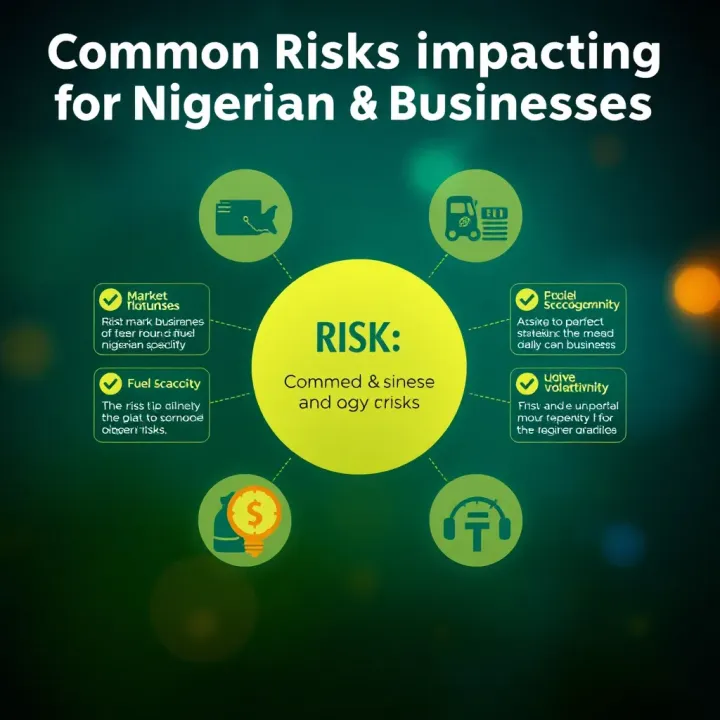
Risk Management Guide for Nigerian Businesses
📊 Learn how Nigerian businesses can spot, assess, and manage risks like market shifts, fuel scarcity, or naira volatility to protect profits and stay ahead. ✅
Edited By
Isabella Knight
Strategic risk management is no longer a luxury for Nigerian businesses; it’s a necessity. In an environment where economic shifts, regulatory changes, and infrastructural challenges can disrupt operations without warning, business leaders need a clear plan to identify and handle risks before they escalate.
Unlike day-to-day operational risks, strategic risks are those that can affect a company’s long-term goals and survival. For example, a manufacturing company relying heavily on imported raw materials from Europe faces foreign exchange volatility risks when the naira weakens. Without a proper management plan, such currency risks could sharply raise costs, eroding profit margins.

Implementing strategic risk management means embedding risk assessment into your business’s core decision-making process. This involves:
Defining your business objectives clearly
Identifying potential risks that can hinder those objectives
Analysing these risks by likelihood and impact
Creating response plans to mitigate or capitalise on risks
Monitoring threats continuously, especially given Nigeria’s dynamic economic landscape
Many Nigerian firms neglect strategic risk management until a crisis hits. But the companies that regularly evaluate risks — like fluctuating fuel supply or uncertain policy changes — stand a better chance of adapting and thriving.
A practical example is a logistics company in Lagos that, instead of relying solely on diesel generators during power outages, diversifies power sources and negotiates flexible fuel supply contracts. By doing so, it reduces operational interruptions and manages costs better than competitors.
This article will guide you through straightforward steps to integrate strategic risk management into your business strategy. You’ll learn to spot key risks specific to Nigeria — like foreign exchange risks, regulatory uncertainty, and supply chain disruptions — and apply risk controls that suit your industry and scale.
With this practical approach, Nigerian businesses can make informed decisions that protect their future profitability and growth.
Strategic risk goes beyond everyday operational hiccups. Businesses face risks that can reshape their long-term path, affecting growth, market position, or viability. Grasping what constitutes strategic risk helps Nigerian companies anticipate threats tied to big-picture decisions — like expanding into new markets, adapting to digital shifts, or responding to shifting regulations. This understanding equips leaders to make choices that protect and build lasting value.
Strategic risk refers to potential threats arising from a company's long-term plans and business environment. These risks stem from choices that affect the organisation's direction, such as product launches, mergers, or market expansion. Unlike operational risks, which deal with day-to-day processes, strategic risks hinge on external factors and high-level decisions.
In Nigeria, strategic risks might include the uncertainty caused by fluctuating naira exchange rates affecting import-dependent businesses, or sudden regulatory shifts in the telecom sector impacting service providers like MTN or Airtel. For instance, a manufacturing company investing heavily in imported machinery may face strategic risk if foreign exchange restrictions tighten unexpectedly, raising costs and delaying projects.
Operational risk involves internal failures — such as machine breakdowns, staff errors, or supply chain hiccups — that disrupt daily activities. Strategic risk, on the other hand, comes from broader market dynamics and executive decisions affecting the company's future health. For example, choosing to enter a saturated market without proper research is a strategic risk, while a factory fire disrupting production is operational.
Properly managing strategic risk safeguards a company’s survival over time. Businesses that ignore strategic threats may face irreversible damage, like loss of customers or reputational harm. Conversely, understanding and adapting to risks—like political unrest or economic downturns—can help Nigerian companies ride out tough periods and thrive.
Risk management supports maintaining and growing competitive edge. When a fintech startup in Lagos anticipates regulatory changes, it can adjust products to stay ahead. Ignoring such risks risks being overtaken by more agile businesses. Strategic risk oversight ensures growth initiatives align with market realities, avoiding wasted resources.
Investors watch how firms handle risks, as poor management often signals deeper flaws. Strategic risk mishandling can lead to volatile earnings, making investors wary. Nigerian businesses with clear risk frameworks tend to attract funding more easily, since transparency and preparedness promise steadier returns and boost confidence in markets with high uncertainty.
Effective strategic risk management is not a luxury but a necessity for Nigerian businesses navigating a complex economic and regulatory terrain. It turns unknown threats into manageable challenges, creating a foundation for sustainable success.
Developing a strategic risk management framework is essential for Nigerian businesses keen on staying afloat amid economic swings, regulatory shifts, and fierce competition. A well-defined framework helps companies anticipate potential threats and craft timely responses. This approach not only safeguards operations but also sharpens decision-making, improving resilience and competitiveness.
Identification is the first and crucial step. Nigerian companies often use brainstorming sessions, SWOT analysis (strengths, weaknesses, opportunities, threats), and stakeholder consultations to uncover risks. For example, a manufacturing firm in Lagos might identify currency fluctuations affecting import costs or political instability before upcoming elections. Early identification allows the firm to prepare rather than scramble when challenges arise.

In Nigeria’s unique market, risks commonly arise from regulatory changes, infrastructure gaps, and socio-political unrest. These factors differ across sectors; a fintech startup might focus on cybersecurity threats and regulatory compliance, while an agric business monitors climate risks and transport disruptions. Understanding the local landscape sharpens risk detection.
Evaluating how likely a risk is and its potential impact helps prioritise actions. A risk like persistent power outages might have a high chance of occurring and a severe impact on production, demanding urgent attention. On the other hand, a less probable cyber attack might be monitored but not immediately addressed.
Tools like risk matrices and heat maps provide visual clarity. They allow business leaders to see which risks sit at the critical end of likelihood and impact scales. For example, plotting supply chain delays on a heat map reveals urgent hotspots. This graphical approach aids in conveying risk urgency across departments.
Mitigation means taking steps to reduce risk effects. Nigerian companies might invest in generators to offset power challenges or diversify suppliers to manage supply disruptions. Beyond mitigation, businesses decide whether to accept, transfer, or avoid risks. Transferring risk could mean buying insurance against cargo loss, while avoidance might involve withdrawing from unstable regions.
It is vital that risk responses align with corporate goals. A growing e-commerce firm, for instance, should prioritise risks hindering customer trust like data breaches over less immediate concerns. Aligning ensures resources are focused on protecting what matters most.
Setting performance indicators and establishing risk triggers enables ongoing vigilance. Tinges like worsening foreign exchange rates or new tax policies serve as alerts for revising strategies. This is particularly relevant in Nigeria’s fast-moving economic environment.
Feedback loops—regular reviews and updates—keep the risk framework dynamic rather than static. Nigerian businesses benefit by adapting quickly when market conditions shift, avoiding the trap of outdated risk plans that fail during critical moments.
A strategic risk management framework is not a one-off project but a continuous cycle. Nigerian firms that master this cycle can confidently face uncertainty and evolve in step with the country’s challenging business climate.
By following these steps, Nigerian companies stand a better chance of turning risks into manageable challenges and seizing opportunities without exposing themselves unnecessarily.
Nigerian businesses encounter unique challenges when managing strategic risks, often shaped by local economic, regulatory, and infrastructural realities. Understanding these challenges is essential for crafting realistic and effective risk management plans that reflect Nigeria's dynamic business environment.
The naira's frequent instability directly affects Nigerian firms’ pricing, profit margins, and international trade dealings. When the Central Bank of Nigeria (CBN) adjusts exchange rates or foreign currency becomes scarce, businesses importing raw materials or equipment find costs unpredictable. For example, a manufacturing company relying on tokunbo machinery might see its operational expenses jump unexpectedly due to exchange rate shifts, squeezing liquidity and complicating budgeting.
Inflation erodes purchasing power and inflates costs, which businesses must manage carefully to avoid profit loss. During high inflation phases, such as those experienced in recent years, companies must review supplier contracts and pricing models regularly. Many resorts to hedging financial risks by negotiating shorter contract durations or tying costs to variable rates. Though challenging, these steps help businesses maintain stability amid soaring prices for fuel, transport, and other inputs.
Constant shifts in policy, particularly in tax and trade regulations, create compliance headaches and strategic uncertainty. For example, sudden changes in import tariffs or tariffs on finished goods can disrupt supply chains and force businesses to rethink sourcing strategies swiftly. This unpredictability increases the cost of doing business and may deter investment.
Taxation remains a major concern for Nigerian companies. The Federal Inland Revenue Service (FIRS) and State Internal Revenue Services often update rules on tax filings, penalties, and exemptions. Navigating these updates requires firms to invest in continuous training and software upgrades to avoid penalties. Many businesses find their cash flows impaired by unexpected tax demands or penalties arising from non-compliance, further complicating strategic planning.
Unsteady electricity supply and the high cost of diesel fuel for generators continue to weigh heavily on firms. Industries such as manufacturing or data centres incur significant operational costs maintaining equipment during NEPA (national electricity grid) outages. This inconsistency forces many to allocate higher budgets for power, cutting into planned investments in growth or technology.
Poor road networks, frequent danfo strikes, and port delays challenge timely delivery of goods. This can delay production schedules and frustrate customers, especially those in fast-moving consumer goods (FMCG) or retail sectors. For instance, companies distributing perishables via keke napep or road haulage often face spoilage and wastage risks, directly affecting profitability.
Many Nigerian businesses lack a formal risk management culture, relying instead on informal gut decisions. This habit increases vulnerability to unexpected shocks. For example, a small-scale agribusiness might ignore market trends or regulatory changes until problems become urgent, missing opportunities to adjust early.
The effectiveness of risk management depends heavily on commitment from senior leaders. Firms where boards and executives actively engage in identifying and mitigating risks tend to make more informed strategic choices. Conversely, where leadership lacks awareness or support for risk policies, efforts may be fragmented and ineffective. Strong leadership sets the tone for a proactive risk-aware culture essential for navigating Nigeria's complex business risks.
Businesses that recognise these challenges and embed local insights into their strategic risk management stand a better chance of surviving and thriving in Nigeria’s demanding market.
By addressing these specific hurdles, Nigerian companies can improve resilience and seize growth opportunities despite uncertainties. Practical awareness and adaptation to local conditions are the foundation for robust strategic risk management in Nigeria today.
Managing strategic risk effectively requires Nigerian businesses to adopt practical tools and embed best practices into their operations. This approach not only helps identify and manage risks early but also strengthens decision-making and resilience, especially in a challenging environment marked by economic swings and regulatory changes.
Using local fintech platforms for real-time data
Local fintech firms like Paystack, Flutterwave, and OPay offer live transaction data and consumer behaviour insights that are crucial for timely risk detection. Nigerian businesses can integrate these platforms to monitor payment patterns, spot anomalies, and respond quickly to fraud or cash flow issues. For example, a retailer can track sudden drops in online payments and investigate fast, preventing inventory buildup or loss.
Risk modelling and forecasting tools
Modern software allows firms to run simulations based on market trends, currency fluctuations, and regulatory developments in Nigeria. Tools combining artificial intelligence with historical data, such as those offered by some specialised Nigerian consulting firms, enable better forecasting of potential shocks. This capability lets companies prepare for likely scenarios, like naira devaluation or power outages, by modelling impacts on costs and revenues.
Training and capacity building
Developing staff skills in risk management is vital. Companies can organise workshops and certification programmes focusing on strategic risk, tailored to Nigeria's specific challenges like inflation or infrastructure gaps. For instance, a manufacturing firm might train its supply chain managers on spot risk identification during fuel scarcity seasons.
Communication and transparency
Risk management should not stay confined to boardrooms. Encouraging open discussions across departments helps spot issues early and builds trust. Regular risk reports and clear channels for reporting unusual occurrences empower everyone, from frontline staff to executives, fostering a collective responsibility for managing strategic risks.
Working with auditors, consultants, and regulators
External auditors and consultants bring fresh perspectives and technical know-how. Nigerian firms benefit from expert reviews of their risk frameworks, ensuring compliance with evolving regulations by agencies like the Securities and Exchange Commission (SEC) and Federal Inland Revenue Service (FIRS). Such engagement also prevents costly missteps related to tax and corporate governance.
Collaborations within industry associations
Joining bodies like the Lagos Chamber of Commerce or industry-specific groups enables businesses to share risk insights and best practices. Peer learning can alert companies to emerging threats such as policy shifts or disruptions caused by challenges in energy supply. Collaborative efforts also strengthen advocacy for better business conditions in Nigeria.
Integrating technology, building a strong risk culture, and tapping external expertise together create a practical and resilient framework for managing strategic risks amid Nigeria’s dynamic business environment.
Strategic decisions shape the path of any business, especially in Nigeria's unpredictable environment. Managing risk as part of decision-making means businesses don’t just chase growth blindly—they balance ambition with caution. This approach helps firms avoid costly mistakes like launching products without market fit or entering unstable regions without due diligence.
Before entering a new market or launching a product, Nigerian businesses must assess factors like consumer behaviour, competition, and regulatory hurdles. For example, a Lagos-based fintech planning to expand to northern states should evaluate mobile phone usage patterns and local regulatory requirements. Ignoring these can lead to poor adoption or legal issues. By measuring risks upfront, companies can tailor marketing strategies or modify products to fit diverse preferences.
Economic uncertainty—such as fluctuating naira exchange rates—affects costs and expected returns. A manufacturing firm considering setting up a new plant must calculate not just construction expenses but also potential fuel price hikes for generators. Careful weighing of costs against benefits ensures firms don’t overcommit resources in unstable times, preserving financial health while still positioning for expansion.
Nigeria’s economy cycles through booms and busts impacted by global oil prices, inflation, and policy shifts. Businesses must plan for downturns by modelling worst-case scenarios and identifying which operations to scale back quickly. For instance, a consumer goods company could prepare by securing alternative suppliers and liquid assets to ride out possible currency crashes or import restrictions.
Supply chains in Nigeria face challenges like poor roads, customs delays, and occasional strikes. Companies relying on imported raw materials should have backup suppliers or local options ready. For example, a garment manufacturer might source fabric from both Lagos ports and local textile hubs around Kano to avoid production halts. Such contingency planning reduces costly downtime and builds resilience.
Strategic decision-making with risk in mind is about being ready for the unexpected while seizing growth chances carefully. This balance enhances Nigerian firms’ ability to thrive in a volatile business climate.
📊 Learn how Nigerian businesses can spot, assess, and manage risks like market shifts, fuel scarcity, or naira volatility to protect profits and stay ahead. ✅

📊 Learn how Nigerian businesses can spot and handle financial risks smartly. Discover key methods, tech tools, and local regulatory rules to protect ₦ and grow strong.

Secure your Nigerian business against economic shifts and operational risks with practical strategies, smart tech use, and solid decision-making tools 📊💼

🔍Explore how Nigerian businesses use Integrated Risk Management to spot and handle risks, boosting decision-making and resilience amid local challenges and regulations.
Based on 5 reviews